
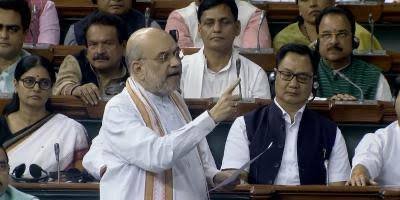
The Parliament’s Monsoon Session heated up dramatically on Wednesday as Union Home Minister Amit Shah introduced three contentious bills in the Lok Sabha, prompting fierce protests and a brief adjournment amid unprecedented scenes.
Key Bills Introduced
1. Constitution (One Hundred and Thirtieth Amendment) Bill, 2025
• Seeks to amend the Constitution allowing for the removal of the Prime Minister, Chief Ministers, or ministers if they are detained for 30 consecutive days on serious criminal charges (punishable by at least five years in prison) — even in the absence of a conviction.
2. Government of Union Territories (Amendment) Bill, 2025
• Expands similar provisions to Union Territory administrations.
3. Jammu and Kashmir Reorganisation (Amendment) Bill, 2025
• Modifies Section 54 of the 2019 Reorganisation Act, extending such removal rules to J&K.
Political Fallout and Protest Highlights
• As the bills were tabled, opposition MPs erupted in protest—tearing copies and throwing paper bits at Amit Shah, accusing the government of undermining democracy. Chaos prompted Speaker Om Birla to adjourn the House temporarily amid uproar.
• AIMIM’s Asaduddin Owaisi condemned the measures as a “death nail” for elected governments, warning they risk pushing India toward a “police state” by circumventing due process.
Next Steps
• The Lok Sabha has referred the trio of bills to a Joint Parliamentary Committee for detailed scrutiny.
• Following the uproar, both the Lok Sabha (till 3 PM) and later till 5 PM were adjourned.
Why It Matters
This move marks a fundamental shift in accountability norms—allowing detention, without conviction, to trigger removal of high office bearers. Supporters argue it strengthens governance integrity; critics see a grave threat to democratic checks and balances. The bills’ referral to a Joint Committee could be a pivotal moment, shaping India’s governance architecture.