
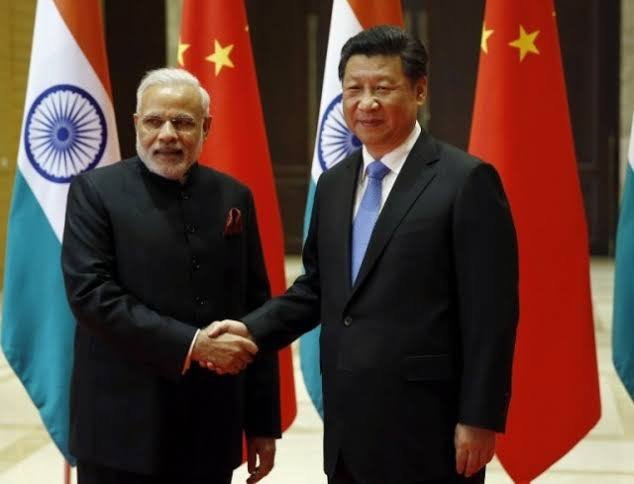
India has publicly reaffirmed the One-China policy, confirming that it recognizes Taiwan as part of China for the first time since 2008. This statement marks a significant return to explicit support of the policy after nearly two decades of diplomatic ambiguity.
Why This Matters
• Diplomatic History: Since recognizing the People’s Republic of China (PRC) in 1950, India had adhered to the One-China policy but gradually shifted to a posture of “strategic ambiguity”—avoiding direct reaffirmation of the principle.
• Renewed Clarity: The new statement breaks from that ambiguity, reinforcing India’s alignment with Beijing’s core territorial stance, including the sovereignty claim over Taiwan.
In Context
• Taiwan’s Outreach: Over recent years, Taiwan expanded its presence in India, including opening its third Taipei Economic and Cultural Center (TECC) in Mumbai in October 2024—an act that drew protests from Beijing.
• India–Taiwan Relations: Despite the absence of formal diplomatic ties, India and Taiwan have maintained robust economic, cultural, and techno scientific engagement, often facilitated through representative offices and mutual investment agreements.
• Rising Strategic Stakes: As tensions with China have intensified, particularly along the disputed Himalayan border, Beijing has grown increasingly sensitive to any perceived diplomatic outreach between India and Taiwan—even in non-political domains.
Implications of the Statement
• Balancing Act: The clear reaffirmation may be an attempt by India to manage its China policy more deliberately, signaling to Beijing that economic and cultural ties with Taiwan won’t cross a red line of sovereignty.
• Diplomatic Message: This reassertion could help preempt diplomatic friction with China, particularly concerning Taiwan’s increasing international presence.
• Room for Caution: Analysts will now closely watch whether India’s posture hardens—or if the reaffirmation is purely symbolic, allowing continued unofficial cooperation with Taipei.